Émile LENOBLE (1875–1940)
Circular Bowl with Geometric Motifs
France, c. 1925
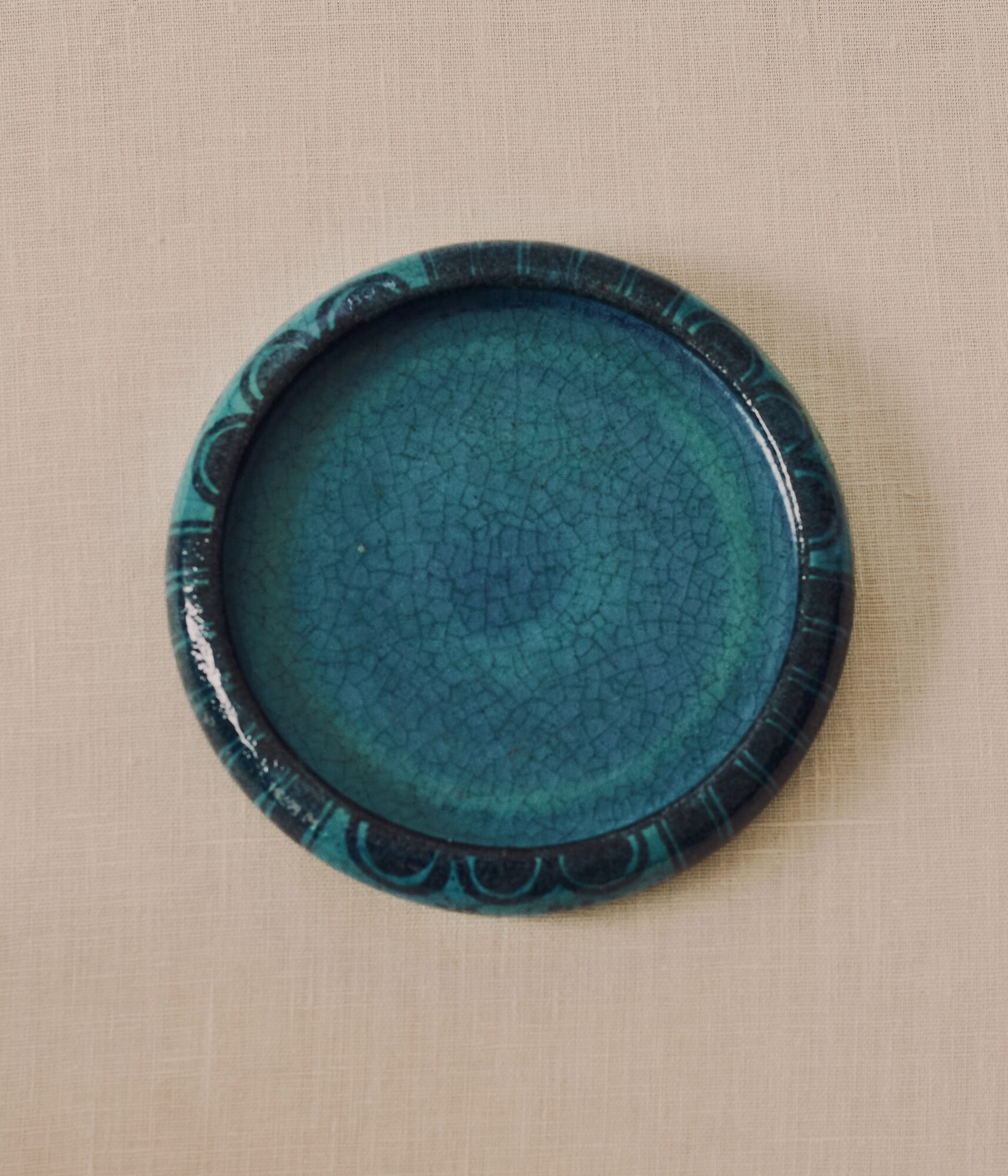
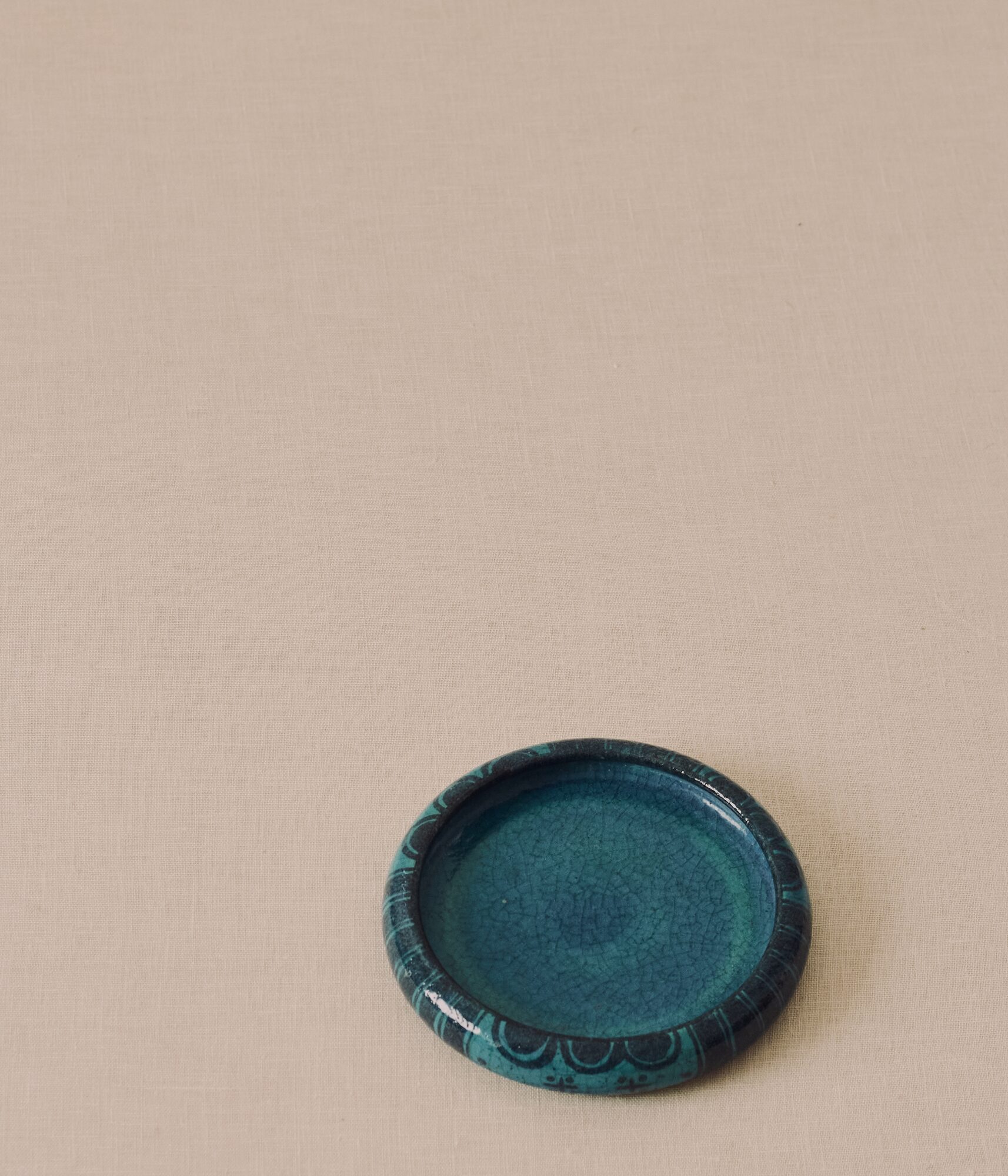
A refined Art Deco ceramic bowl with a high, quarter-round border and a generous central well, executed in polychrome enameled stoneware. The geometric motifs are rendered in deep navy blue against a luminous turquoise ground, often referred to as Egyptian Blue, with a finely crackled glaze that lends the piece remarkable depth and an almost archaeological presence. The rhythmic, stylized border pattern wraps the rim with quiet precision, reflecting Lenoble’s sensitivity to ancient and Asian ceramic traditions reinterpreted through a modernist lens. Signed with the artist’s monogram stamp under the base.
Émile Lenoble (French, 1875–1940) was one of the most important French ceramists of the early twentieth century. Son-in-law and collaborator of Ernest Chaplet, Lenoble established his studio at Choisy-le-Roi, where he developed a distinctive body of work inspired by Song dynasty Chinese stoneware, Korean celadons, and early Mediterranean pottery. His refined forms, muted palettes, and incised or enameled geometric decoration helped define a modern French ceramic vocabulary. Lenoble’s work is held in the permanent collection of The Metropolitan Museum of Art, New York, as well as the Musée des Arts Décoratifs in Paris and the Victoria and Albert Museum, London.
Beautiful, museum-quality condition. The glaze retains its original luminous turquoise tone with the characteristic fine crackle throughout. Minor surface wear consistent with age, contributing to the character and authenticity of the piece.
Diameter 6.5 inches (16.5 cm)
Price Upon Request
InquireAll pieces are available for pickup in Los Angeles or shipment worldwide.
Please request a shipping quote before purchasing, or select local collection during checkout.